A reader lives a thousand lives before he dies. The man who never reads lives only one.
- George R.R. Martin
It’s the year 2378, and your descendants—so far removed they mispronounce your surname—are rummaging through a storage locker on Moon Colony 13. Inside a dusty box they find what’s left of you: a concert wristband, a cracked mug you swore you’d fix (before coffee was outlawed during the Caffeine Wars), a handwritten grocery list, and other sentimental debris.
“Whoa,” one of them gasps, “an iPhone 16.”
“Yeah,” says another, “this thing would be worth a fortune—if only they’d kept the box.”
They all nod, slowly, like historians who have discovered that an otherwise sophisticated civilization invented the wheel but used it as a decorative hat.
Which brings us to the dust jacket.
Designed to Disappear
The earliest dust jackets weren’t designed to be admired. In fact, they weren’t designed at all.
They were simply wrapping. Plain paper slipped over cloth-bound books to keep them from getting scuffed in transit.
In ABC for Book Collectors, John Carter describes these early jackets as “ephemera in the most literal sense.” Something meant to be removed and thrown away before the book was even opened.
The book was the object, the binding the art. And the jacket was the paper napkin under the pastry.
Everyone who touched it was complicit in its demise.
Booksellers peeled jackets off so the bindings would show better in window displays. Libraries removed them because they interfered with cataloging and circulation. Readers stripped them because they crinkled, slipped, and generally behaved like they resented being touched.
If a dust jacket survived the 19th century, it did so because someone was lazy, neurotic, or a hoarding pioneer.
Yet, despite entering the world as doomed detritus, the dust jacket got an unlikely reprieve.
The oldest known dust jacket dates to 1829 and originally wrapped a gift book titled Friendship’s Offering. It survives today in the Bodleian Library, complete with traces of sealing wax and printed notices advertising the book as “elegantly bound.”
Art, Marketing, and the Collector as Savior
By the early twentieth century, the dust jacket shifted from protection to persuasion as publishers discovered it could help sell a book.
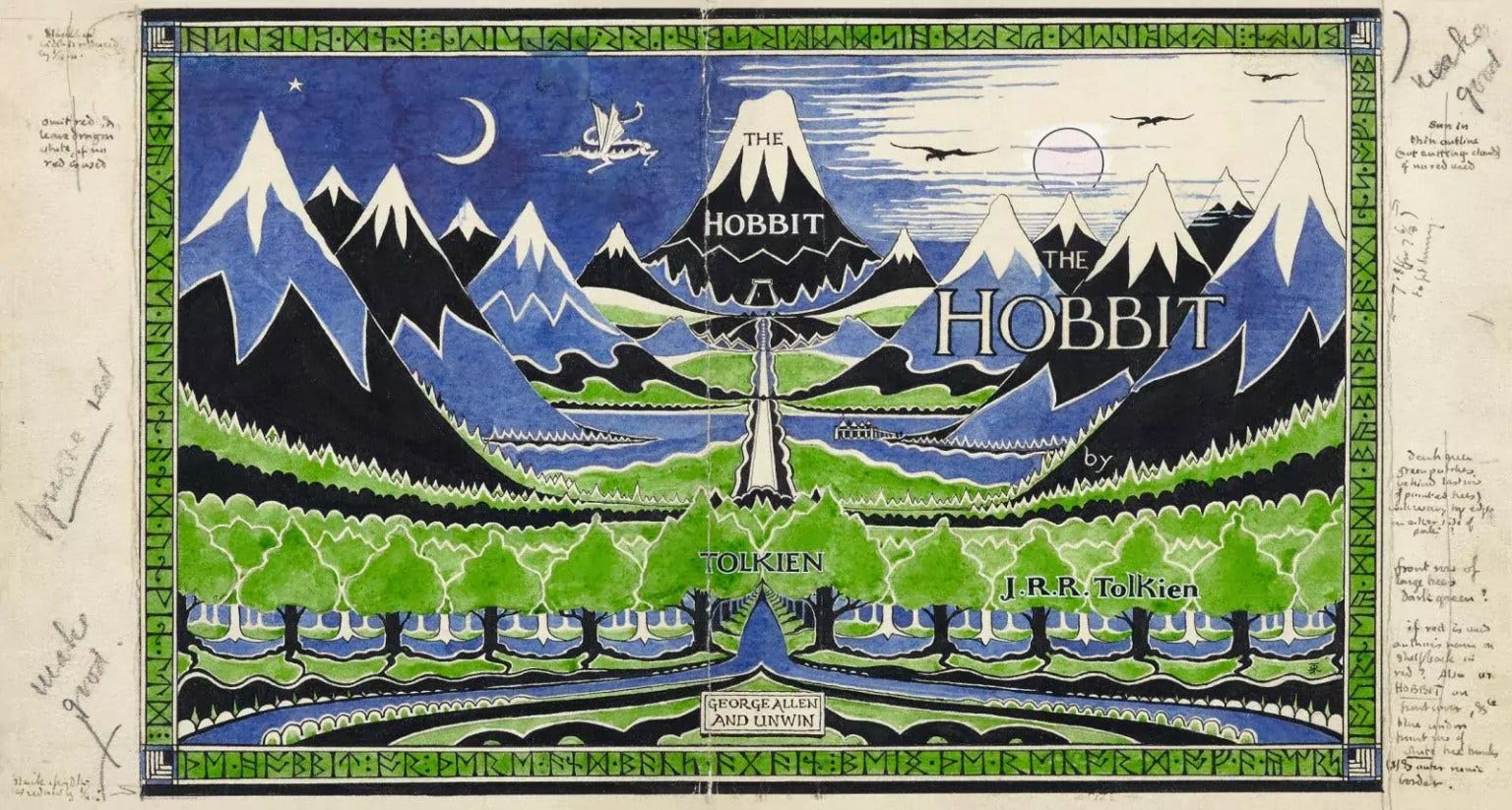
Illustration replaced plain paper and typography became expressive. The jacket became the first impression, setting the mood, making a promise from across the bookstore.
Certain visual styles became recognizable at a glance: the sharp geometric patterns of the 1920s, the painterly author portraits of midcentury literary fiction, the minimal modern jackets from Knopf. One could sometimes identify the publisher, even the era, without opening the book.
The dust jacket was no longer an afterthought; it was the reason you picked up the book.
Then something unexpected happened.
Once readers started looking forward to new dust jackets, collectors started looking backward for the ones that were missing.
Most were gone. But those that weren’t made some books worth a fortune.
Consider The Great Gatsby. When it was published in 1925, the first edition jacket featured artwork by Francis Cugat, a surreal, haunting image of celestial eyes overlooking a carnival. The jacket was striking. It was also paper.


Most people removed it. A few kept it, folded carefully in a drawer or pressed flat in the book itself, but they were the exception.
The book became a classic. The first edition became valuable. And the jacket became the difference between a collectible and a fortune.
If you enjoy this, subscribe here.
A first edition of Gatsby without its jacket might reach the high five-figure range. But with the jacket intact, that number jumps into the hundreds of thousands.
This wasn’t unique to Fitzgerald. Across the rare book market, the same pattern emerged: jackets that survived became the primary determinant of value. The jacket condition often mattered more than the condition of the book itself.
The Protective Wrapper Gets a Wrapper
Walk into a serious bibliophile’s home today and you’ll witness a magnificent inversion of purpose.
Dust jackets encased in archival Mylar sleeves. Crystal-clear protective wrappers for the protective wrapper. Some go even further, adding acid-free backing boards to prevent the jacket from bending or custom-fitted boxes to shield the sleeved jacket.
Book collectors have developed a vocabulary of jacket conditions that would make a gemologist blush: “price-clipped,” “sunned at spine,” “short closed tear,” “minor chipping at extremities.” A difference of millimeters in jacket damage could mean a difference of thousands in value.
Booksellers photograph jackets from multiple angles—front, back, spine, flaps—and note every flaw in prose that approaches the confessional. “Minor wear at crown of spine. Small dampstain on rear panel, not affecting any text.”
Libraries that once stripped jackets now have special collections devoted to preserving them. Archivists wear gloves to handle them. Conservation specialists repair tears with Japanese tissue and wheat paste with the same reverence once reserved for illuminated manuscripts.
The Book Industry Study Group even created a standardized grading system.
The jacket has become the book’s resume, its insurance policy, its authentication document. A book in fine condition with a poor jacket is damaged goods. A poor book with a fine jacket is “salvageable.”
They Thought It Was Trash. We Disagreed.
There’s something inevitable about the dust jacket’s journey.
It entered the world as an afterthought—utilitarian, unglamorous, designed to be discarded the moment it finished its job. Nobody imagined it would matter. Nobody planned for its preservation. It survived, and when it did, it was by accident.
And yet of all the parts of the book, it’s now the one we handle with the most care.
But perhaps that isn’t odd at all.
When the rest of the world was tossing dust jackets in the bin, our bibliophilic predecessors were doing what came naturally.
Because bibliophiles don’t just love books—they love everything books touch, everything that touches books, and everything that once touched something that touched books.
The string from the package. The bookseller’s invoice. The original mailing envelope. The bookmark left inside by a previous owner.
We notice the endpapers, the printer’s device, the kerning on the spine. We save ticket stubs from author signings and obsess over the feel of laid paper. We’re sentimental archivists of the marginal and the peripheral.
Where normal people see a book, we see an archaeological site.
The dust jacket survived because bibliophiles have always cared about the things around a book as much as what’s inside it.
If this was worth your time, the next one will be.
Dig Deeper:
Four of the Earliest (and Most Remarkable) Publisher’s Dust Jackets — ILAB
A Guide to Identifying The Great Gatsby First Editions — Sotheby’s
32 Beautiful Early Dust Jackets for Iconic Books — Literary Hub
ABC for Book Collectors — Oak Knoll Publishing
The Bibliophile: Everything you love about books — except the reviews.